
The Best Wheelchair for Ehlers-Danlos Syndrome (EDS)
For people living with Ehlers-Danlos syndrome (EDS), exhaustion often comes at a daily cost. Sore, overworked muscles compensate for joints that simply can’t support your body. Fortunately, Broda provides the right Ehlers-Danlos Syndrome wheelchairs to let you rest and restore your energy.
Broda uses Comfort Tension Seating® that addresses what individuals with EDS need most: relief from uncomfortable pressure against fragile skin and connective tissue. Our system conforms to the person’s body using individual straps, suspending weight across multiple points rather than a single pressured surface.
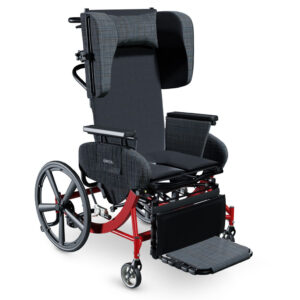
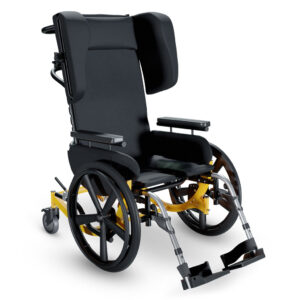
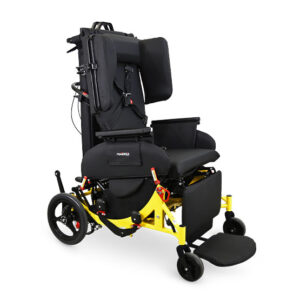
Our Recommended Ehlers-Danlos Syndrome Wheelchairs
What EDS Means for Wheelchair Users
Ehlers-Danlos syndrome (EDS) is a group of 13 connective tissue disorders affecting collagen—the structural protein holding joints, skin, blood vessels, and organs together. According to the Ehlers-Danlos Society, people living with EDS commonly experience loose joints, overly elastic skin, and fragile connective tissue.
For wheelchair users with EDS, daily life often means managing:
- Joints that slip partially or fully out of place
- Chronic pain
- Slow wound healing
- Easy bruising
- Significant fatigue
Managing EDS requires a wheelchair that protects the body’s fragile tissues, supports unstable joints, and helps manage limited energy. The right wheelchair adapts to support symptoms as they shift from day to day.
At Broda, we design wheelchairs specifically for people who need adaptable, supportive, and durable seating throughout the day. Quality design helps individuals and caregivers prevent injuries, stabilize hypermobile joints during transfers, and improve their daily quality of life. For each of these vital benefits, Broda wheelchairs offer meaningful comfort and protection for EDS patients and the caregivers who support them.
Pressure Relief for Fragile Skin and Tissue
EDS causes an individual’s skin to stretch further than normal, to bruise easily, and to heal slowly. The condition also weakens connective tissue, making it more vulnerable to injury. As a result, pressure injuries develop quickly and pose a greater risk than they do for the average wheelchair user. Standard sling-style seating creates shear during repositioning and concentrates pressure, exposing EDS patients to the exact conditions their bodies cannot tolerate.
Using a wheelchair with EDS requires great care. Positioning wheelchairs provide even pressure distribution—meaning less shear and fewer pressure injuries. The chair’s full tilt and recline range allows caregivers to reposition the user throughout the day without manual lifting.
Stable Support for Unstable Joints
For multiple prominent types of EDS, the individual’s joints move beyond their normal range. Everyday activities like shifting positions or transferring wheelchairs may cause a dislocation. This leads to chronic pain, weakening, and joints that become less stable.
Many individuals with EDS require head and neck support. Rehabilitation wheelchairs from Broda are compatible with the Matrx® Seating Series, offering adjustable lateral supports, contoured headrests, positioning belts, and padding packages that configure to each user’s unique joint profile.
The Synthesis Positioning Wheelchair adds up to 40 degrees of tilt and 90 degrees of recline, letting users take pressure off vulnerable joints throughout the day.
EDS and Wheelchair Use: Reducing Daily Life Fatigue
Fatigue remains one of the most common challenges for people living with Ehlers-Danlos Syndrome. The right wheelchair should do more than provide support. It should help conserve energy, reduce physical strain, and allow users to participate more comfortably in daily activities.
Because EDS affects every individual differently, mobility needs can vary significantly. Some people benefit from positioning wheelchairs that minimize joint stress and support comfortable repositioning throughout the day. Others may retain enough strength and stability to use a self-propelled mobility solution.
For select individuals, pedal wheelchairs may offer a way to maintain independent mobility while reducing the effort required to propel a traditional manual wheelchair. However, because repetitive movement can place additional strain on vulnerable joints, users should work closely with their physician, therapist, or seating specialist to determine whether a self-propelled wheelchair is appropriate for their specific needs.
Gentle Transfers and Caregiver-Friendly Adjustments
Transferring a person with EDS requires extra care. One wrong movement can dislocate a shoulder or hyperextend a hip. Broda transport wheelchairs support safer, low-effort transfers with arm, leg, and shoulder supports that swing away for clear access. Smooth, tool-free tilt and recline also help caregivers reposition users with greater control.
Built to Last Through Every Stage of EDS
EDS is a lifelong condition. A wheelchair purchase needs to support the individual through years of daily use, life transitions, and changing mobility needs.
Broda builds its wheelchairs with long-term reliability in mind. A 16-gauge powder-coated tubular steel frame, backed by an industry-leading 10-year frame warranty and 2-year parts warranty, gives users and caregivers confidence that their equipment can continue supporting them well into the future.
Improve Quality of Life with the Best EDS Wheelchairs
We design Broda wheelchairs to protect fragile skin, stabilize hypermobile joints, and make daily life easier for both the user and the people who provide care.

Find a Mobility Solution Today
Chat with a dedicated sales rep today to find the best wheelchair for your specific circumstances.
References
- What is EDS? The Ehlers-Danlos Society. (2026, February 26). https://www.ehlers-danlos.com/what-is-eds/