
Broda designs wheelchairs to accommodate a wide range of conditions. Our wheelchairs for cerebral palsy patients help provide the comfort, positioning, and mobility needed to better manage stiff muscles, hip problems, and other common cerebral palsy symptoms.
What Is Cerebral Palsy?
Cerebral Palsy is a group of neurological disorders affecting a person’s ability to move, maintain balance, and control posture. It is a lifelong condition that disrupts the brain’s control over muscle functions.
Changes and Progression
Cerebral palsy is not a progressive disease, since the initial brain injury doesn’t worsen over time. But symptoms can change over time. As an individual ages, muscle weakness gets worse, and balance tends to worsen. Sometimes the two influence each other.
Secondary complications develop over time, including scoliosis, arthritis, chronic pain, joint issues, fatigue, and other conditions.
Do All People with Cerebral Palsy Use a Wheelchair?
No. Not everyone with cerebral palsy needs a wheelchair. Around 1 in 3 people with cerebral palsy are unable to walk. The need for a wheelchair depends on the specific symptoms and severity of an individual’s condition.
Those most likely to need wheelchair support include individuals with spastic quadriplegia, intellectual disabilities, epilepsy, vision problems, or those who are unable to sit independently.
For those with less severe symptoms, they can occasionally use a walker to help with fatigue and balance for their cerebral palsy. Wheelchairs are then used by those individuals when participating in activities, supporting their positioning needs, and reducing chronic pain.
Broda’s Recommended Wheelchairs for Cerebral Palsy
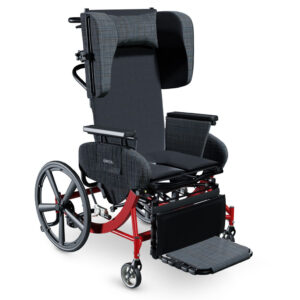
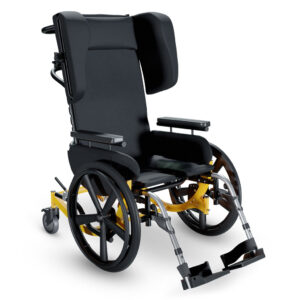
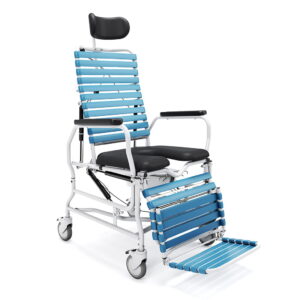
Conditions like hip displacement occur in roughly 35% of children with cerebral palsy, leading to pain and limited mobility that worsens over time. Broda wheelchairs provide excellent support for individuals with cerebral palsy and related conditions, including:
- Muscle stiffness
- Loss of muscle control
- Involuntary or jerky movements
- Coordination issues
- Hip problems
- Curved spine
- Poor posture
- Joint pain
People with cerebral palsy suffer from these conditions when staying in one position too long and from being seated in positions that don’t provide proper support. Without adequate cerebral palsy wheelchair positioning, individuals experience unnecessary discomfort that can exacerbate their symptoms, but this also leads to pressure injuries.
Broda’s Comfort Tension Seating® provides one-of-a-kind straps that mold to the individual’s body, spreading their weight across multiple points, allowing proper airflow, and providing maximum extended comfort.
Features That Support Cerebral Palsy Needs
Broda provides critical features for managing cerebral palsy in a wheelchair that maximize support, comfort, and improved quality of life:
- Adjustable tilt and recline to relieve pressure and reduce pain from tight muscles
- Customizable positioning with adjustable arm, leg, and shoulder supports for proper posture and hip alignment
- Comfort Tension Seating® that conforms to unique body shapes and prevents pressure sores
- Durable 16-gauge steel frames backed by a 10-year warranty for reliable, long-lasting support

Get in touch to discuss how Broda wheelchairs can help improve your quality of life today.