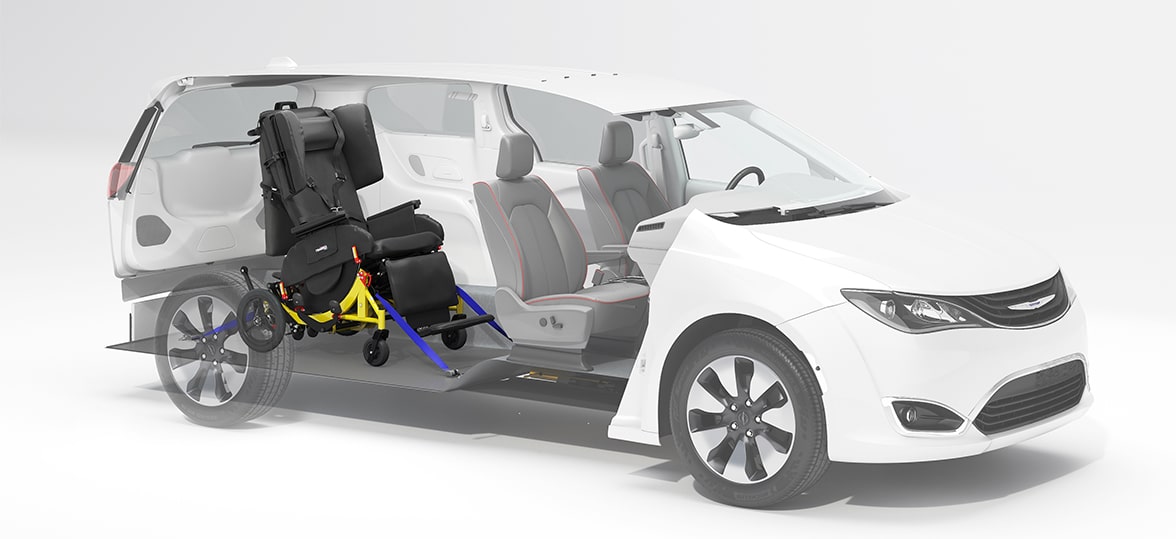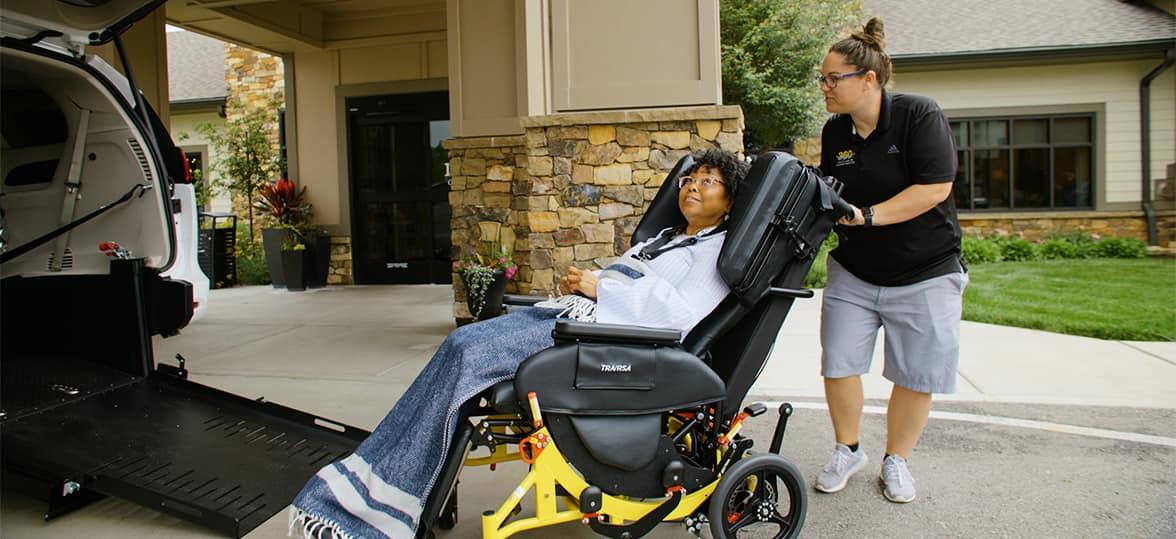
A Broda medical transport chair allows you to complete an NEMT transport with only one person, which improves not only operational efficiency, but the human experience of care itself.
It’s 6:15 in the morning, and the dialysis schedule is already falling behind. One driver waits outside an apartment complex while dispatch scrambles to coordinate a second operator for the transfer. Across town, an elderly patient peeks through her blinds to see if her NEMT has arrived yet. If she doesn’t make it to her appointment, she must push back treatments she desperately needs. Not to mention the missed appointment fee; a drain on her already limited resources. The pressure builds for everyone involved.
As a non-emergency medical transportation (NEMT) provider, you understand how these scenes play out. Your drivers expect their routes to change constantly throughout the day. Unexpected traffic delays set them back. Staffing shortages stretch your teams thin while your patients still depend on reliable transportation to treatments they cannot afford to miss.
Some Problems Shouldn’t Be Part of the Job
What transport challenges could you solve if one operator could safely complete the transport alone with a Broda transport wheelchair?
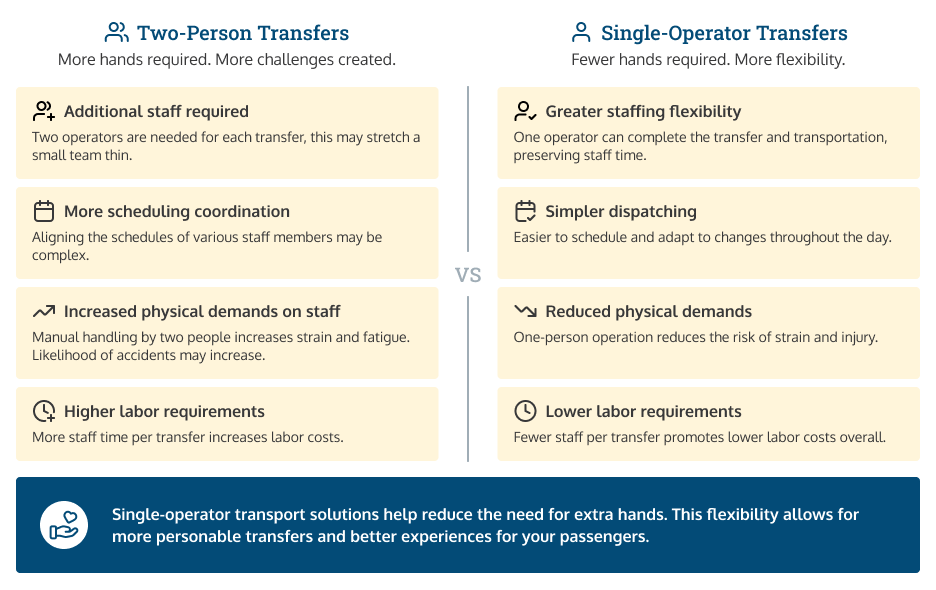
- Labor costs double with every two-team-member transport. Each additional employee changes the economics of the trip.
- Route flexibility shrinks because staffing needs limit scheduling options.
- Dispatchers must constantly rearrange schedules to match available personnel.
- Operators move continuously from stop to stop with very little downtime between transports.
- One delayed transfer creates a chain reaction, disrupting every pickup that follows.
For your operators, the physical demands of the job rarely let up. Repeated repositioning and lifting place constant strain on shoulders, backs, and knees. Over time, those repetitive movements contribute to fatigue and workplace injuries that many transport teams accept as part of the job. They should not have to.
Some NEMT providers are now rethinking whether every transport truly requires two operators.
The Hidden Cost of Two-Person Transfers
The need for a second operator introduces challenges that extend far beyond the transfer itself. Understanding these operational impacts can help providers evaluate how equipment choices affect staffing flexibility, workflow efficiency, and patient care.
Patients Feel the Strain
You know that a delayed pickup affects the more than the NEMT operators. Many of those patients arrive at their appointments feeling flustered and uncomfortable. Some need treatments like dialysis multiple times each week. Others feel physically drained after a short transfer, as they recover from surgery, manage chronic illnesses, or struggle with their mobility limitations.
When their trip requires multiple lifting attempts, awkward repositioning, or long waits for additional staff to arrive, your patients lose confidence. They feel exposed or vulnerable. While the schedule falls further behind, the transfer deteriorates into a stress experience for everyone involved.
These patients simply want transportation that feels smooth, safe, and respectful.
Your equipment dramatically influences the day-to-day experience of your NEMT operations. The right patient transport chair does more than move your patient from one location to another. It reduces the physical strain on your operators, improves transfer efficiency, and keeps the person sitting in the chair from being jostled while crossing over thresholds, or repeatedly repositioned.
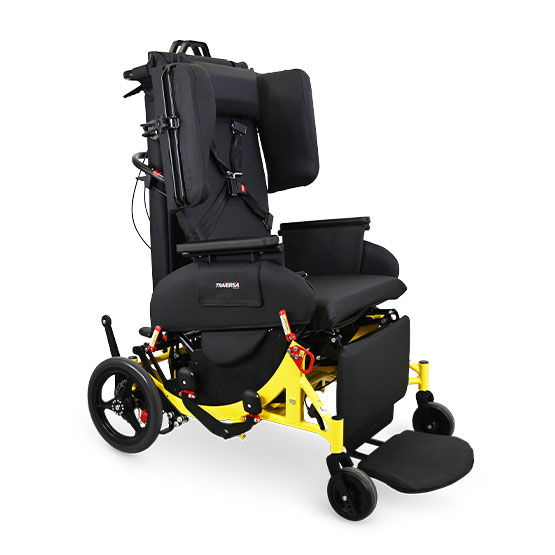
Broda designed the Traversa Transport Wheelchair specifically to support safer, more efficient patient transport workflows. Its adjustable seating height helps operators align the chair more effectively during transfers, minimizing repositioning challenges. Instead of relying on physically demanding two-person lifting methods in every situation, your operators can now complete transfers on their own.
That difference solves a majority of your workday challenges.
The Benefits of a Single Operator
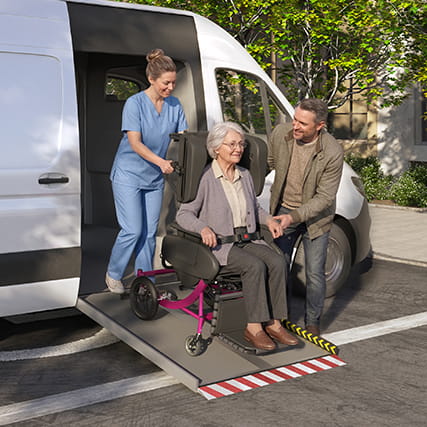
- Single-operator transports improve efficiency by reducing staffing dependencies between pickups.
- Dispatch teams gain more flexibility when building and adjusting routes throughout the day.
- Providers can complete more trips with less physical strain, helping reduce burnout while maintaining quality of care.
Even better, the chair supports your patient. Tilt and recline positioning options help riders remain stable and supported during longer trips, while the chair’s maneuverability allows your operators to navigate tighter spaces with greater control. Apartment complexes, facility hallways, ramps, and vehicle entry points become easier to manage without sacrificing patient dignity or operator safety.
In the end, patients experience comfortable transportation that feels calmer and more respectful.
A Memorable Experience in a Medical Transport Chair
That human side of NEMT work often goes unnoticed. Patients may only spend a short amount of time in transport vehicles, but those moments shape how they experience care itself. A rough transfer, a rushed interaction, or a physically uncomfortable ride stays with them long after the appointment ends. So can a smooth one.
Traversa by Broda: The Ideal Solution for Patients and Operators Alike
If you wanted to transport objects, you could deliver pizzas or Amazon boxes. As an NEMT provider, you choose to work with people. You do far more than move patients between locations. You help people maintain independence, attend life-sustaining treatments, and navigate their most vulnerable moments with as much dignity as possible. Your operator might be the only person connecting your patient to the outside world. The equipment you use can either taint or become the highlight of that experience.
For your NEMT team, a safer one-person patient transport chair is not just a staffing efficiency solution that helps the numbers make sense. It creates a ride that feels more stable, more supportive, and less stressful for everyone involved. Your operators spend less time struggling with the mechanics of the transfer, and more time focused on the person in the chair. Your patients experience a ride that feels more human.
Because at the end of the day, people may not remember every detail of an appointment. But they will remember how they were treated getting there.

Built for Better NEMT Operation
Talk to our team to discover how the Traversa supports greater efficiency and better care.