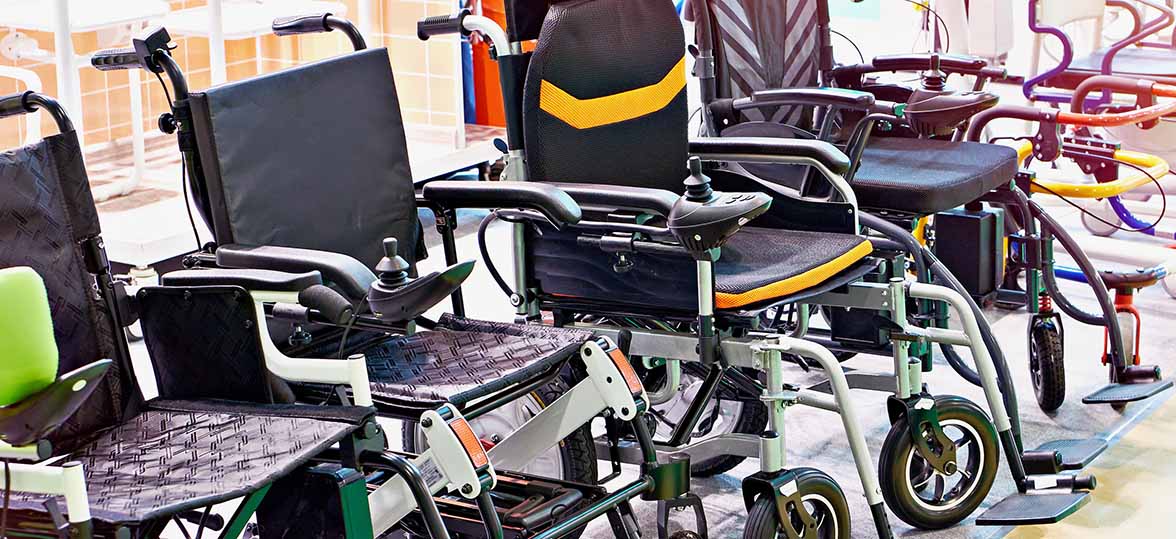
Providing safe and dignified bathing care for wheelchair users is about more than just basic hygiene. As a caregiver, you balance multiple responsibilities, protecting the individual from injuries or falls, keeping them comfortable, and also avoiding your own physical strain.
Below, we discuss how to shower in a wheelchair, offering six essential tips for providing dignified bathing care using a Broda shower wheelchair, covering everything from environmental preparation to post-shower protocols that maintain both equipment integrity and optimal care standards.
1. Prepare the Space for Safety
Ensure there is adequate maneuvering space for safe wheelchair positioning and caregiver movement during transfers and bathing. Broda’s Revive models use 5″ stainless steel casters for maneuverability, while the Revive Bariatric has an added set of 8″ middle casters for added support.
Setting up the shower area properly helps ensure a safe experience and reduces risk of injury for the caregiver and the person in their care.
How to Get a Wheelchair Into the Shower
- Walk-In Shower Access: Use a wheel-in shower with no lip or threshold. This reduces common transfer challenges and safety risks associated with traditional bathtub barriers while allowing smooth wheelchair rolling.
- Before Transfer: Position the wheelchair optimally and adjust Broda’s swing-away arm to provide unobstructed side access to safely move the person in your care.
- Bathing Supply Organization: Arrange all cleaning and hygiene products, towels, and other items within reach so you don’t have to leave the individual unattended.
- Preparing the Water: Run the shower and test the temperature to ensure it is comfortable and safe for the individual.

2. Choose the Right Broda Shower Chair Model
Selecting the appropriate shower wheelchair directly impacts both safety outcomes and care efficiency.
How Wide Is a Shower Wheelchair?
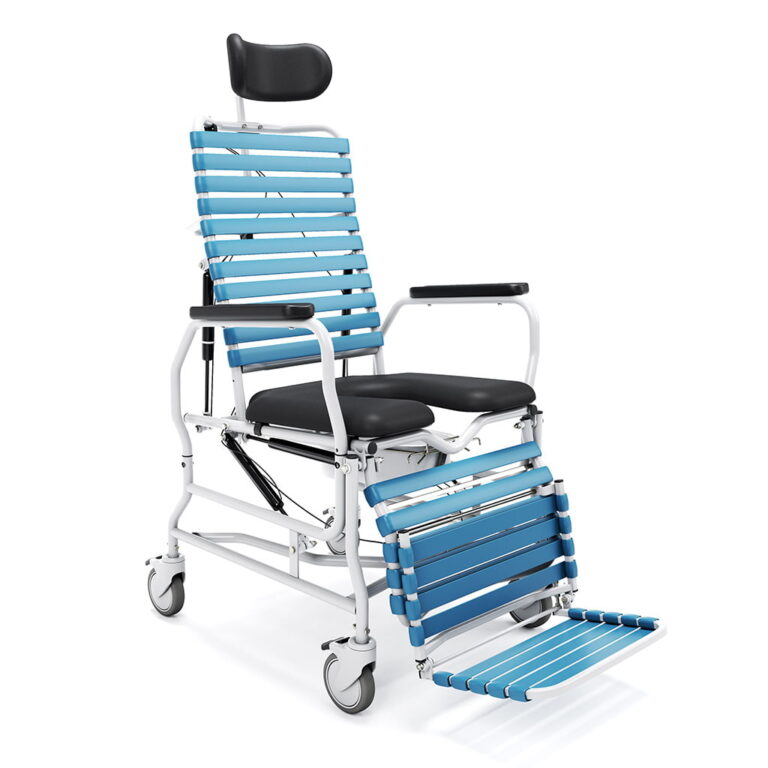
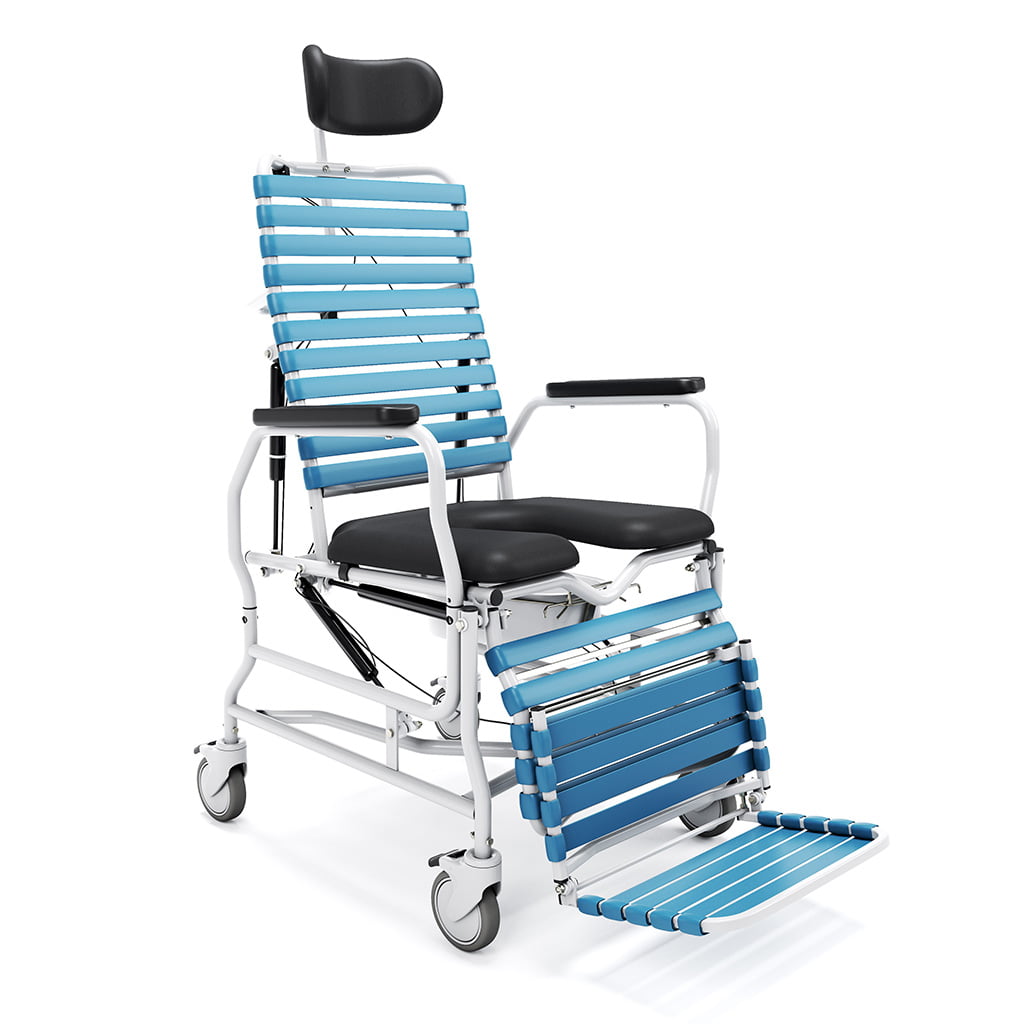
Broda offers two Revive Shower Commode models to empower caregivers with the features needed for safe and comfortable shower routines, and a third model for independent users who don’t require a caregiver. Seating width can be as narrow as 18” up to 33” from the standard models to the bariatric version of the Revive Shower Commode.
Revive Shower Commode
The Revive Shower Commode’s Comfort Tension Seating® system provides pressure redistribution to reduce the risk of pressure injuries during bathing. This shower wheelchair is designed to facilitate single-caregiver operation. Swing-away arms provide smooth side transfers, while the height-adjustable elevating leg supports provide the flexibility to support the individual’s body length.
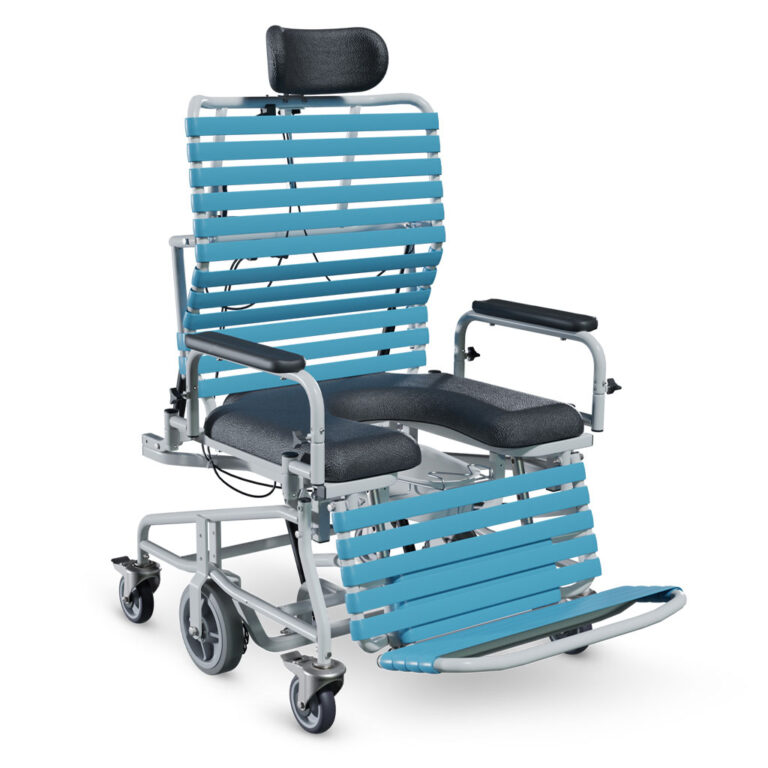
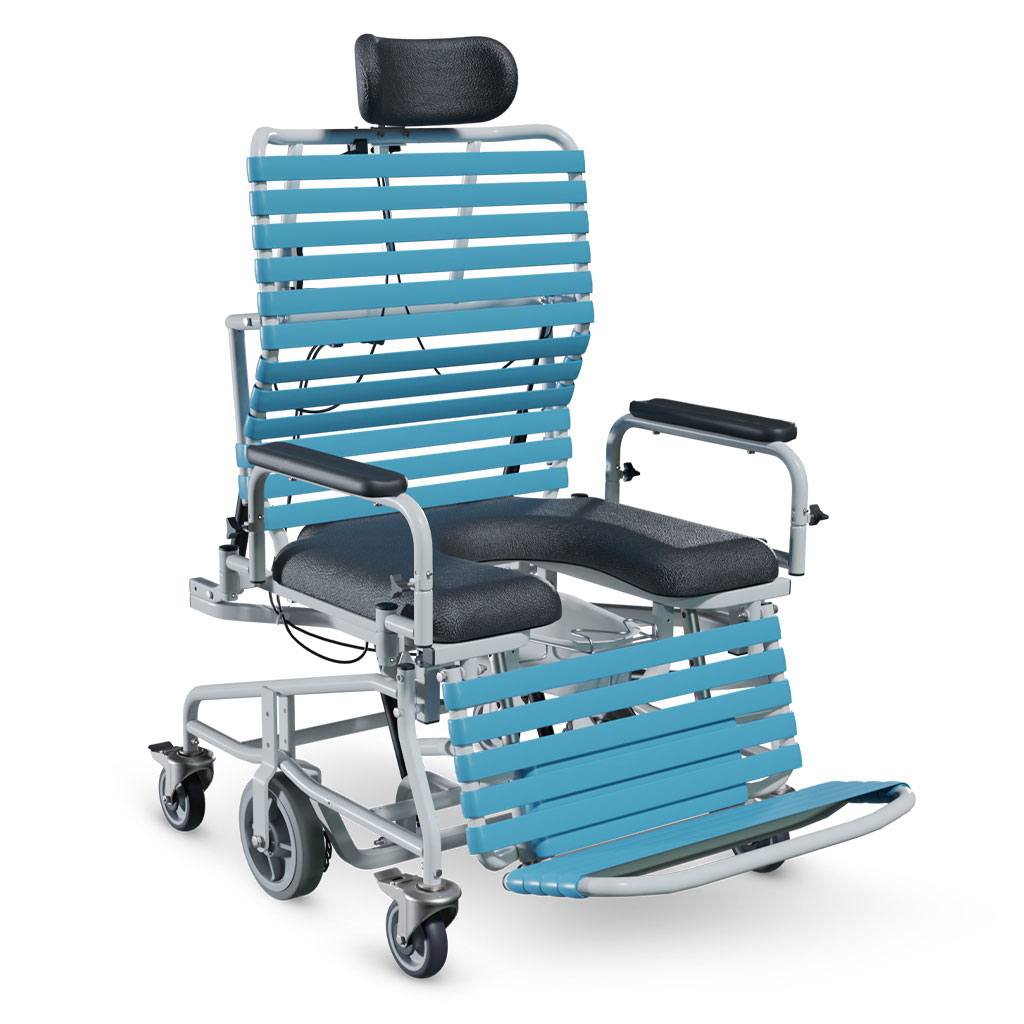
Revive Bariatric Shower Commode
The Revive Bariatric Shower Commode offers the same features, with additional elements to provide the stability required for bariatric care. The adjustable seat width accommodates each body type while providing the necessary postural support. This model’s additional wheel configuration provides stability during positioning changes to support the unique needs of higher-weight users.
Always use two caregivers to transfer individuals for optimal safety.
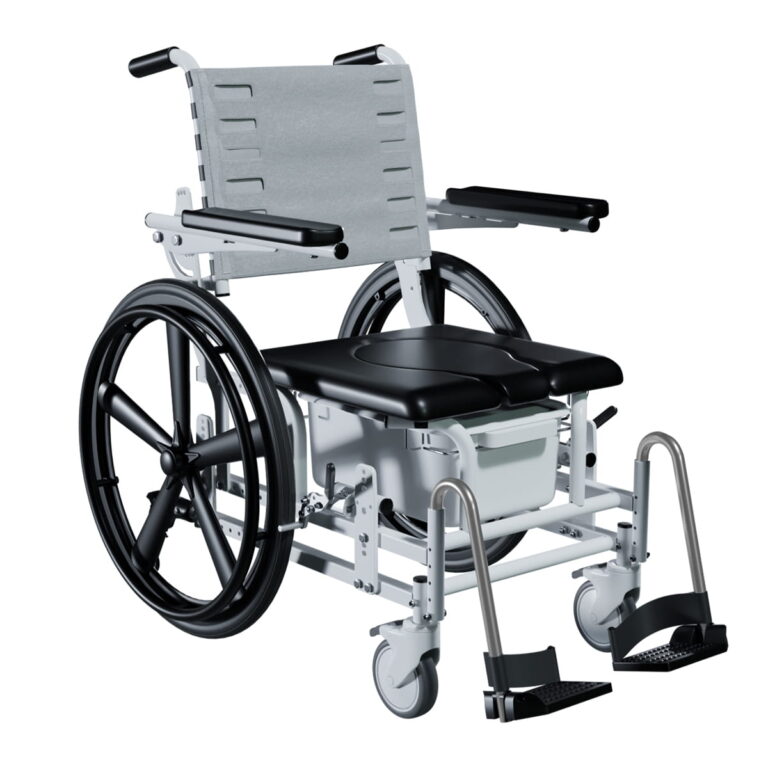
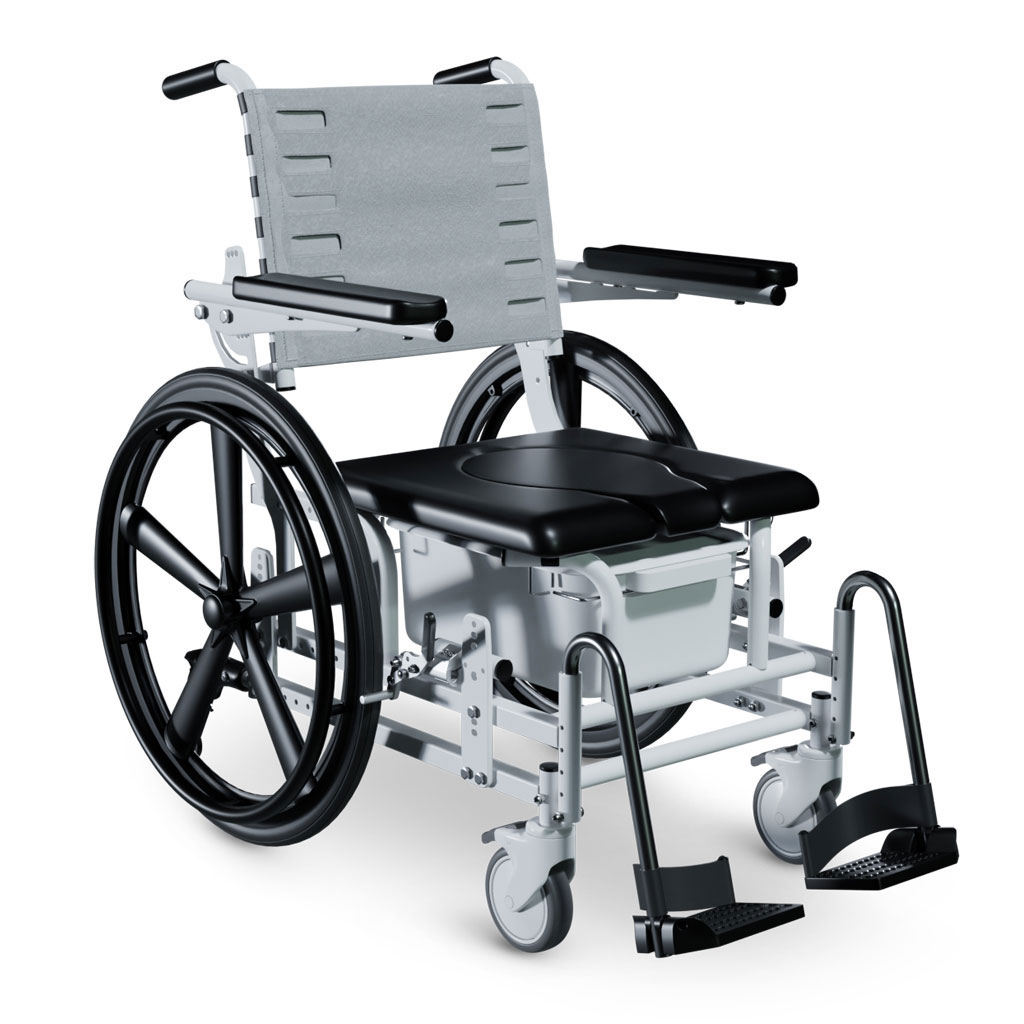
Sentinel Shower Commode
If you can shower in a wheelchair without caregiver assistance, Broda also offers the Sentinel Shower Commode to provide the essential non-positioning features needed by individuals capable of self-mobility.
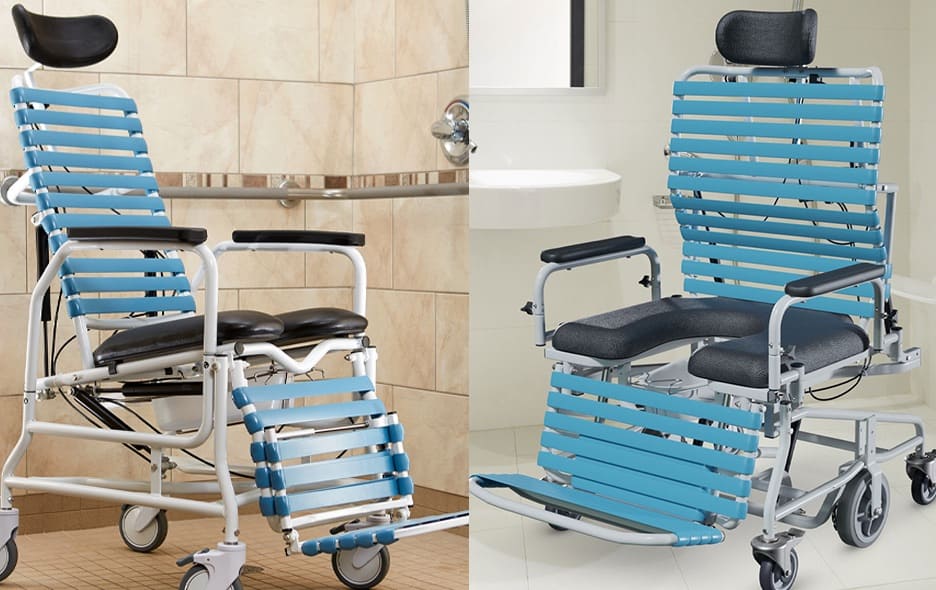
3. Secure the Wheelchair and User Before Showering
Position the wheelchair so that there is adequate space for comfortable movement throughout the bathing process, including room for reclining the individual. Planning this at the beginning, before the individual is moved to the wheelchair, prevents potential injury from trying to make cumbersome adjustments mid-shower.
Engage all wheel locks, including the middle caster locks for the bariatric model, to prevent injuries or falls from slipping or unexpected movement.
User Assessment
Establish an assessment protocol to evaluate the individual’s physical condition as a baseline before transfer and bathing.
Assess their skin for redness, breakdown, or any other areas of concern and document them. Make note of their current positioning and any factors that require positioning and other accommodations.
4. Use Proper Transfer Techniques
Taking time and care when transferring the individual to the Broda shower wheelchair reduces the risk of injury for the caregiver and the person they care for.
Swing-Away Arm and Manual Transfer
Use Broda’s swing-away arm position for easy manual transfer of the individual to the shower wheelchair. Once they are in a comfortable position, return the arm support to its functional position.
Post-Transfer Verification
Check the individual’s position before making any adjustments, and ask them to confirm they are comfortable. Double-check each wheel to make sure they are all locked in position.

5. Maintain Hygiene and Comfort During the Shower
Every individual is different, so it’s important to make full use of Broda’s positioning features to accommodate the best adjustments for the person to whom you are providing care.
- Adjust Positions: Use the wheelchair’s tilt and recline functions to safely and comfortably access areas of the body that are harder to clean, like the abdominal and perineal areas. Proper adjustments also reduce physical strain for the caregiver.
- Manage the Individual’s Safety and Comfort Throughout: As you wash them, examine all pressure-bearing surfaces for skin integrity concerns to avoid any shearing or creating pressure sores. Continue to check the water temperature and observe the individual’s response to positioning changes.
6. Follow Aftercare and Wheelchair Maintenance Procedures
Post-bathing procedures ensure the safety of the person in your care and the longevity of the equipment.
Drying the Individual
Cover the person in your care with towels to maintain warmth. Use gentle patting motions to dry them thoroughly, as wet skin is more prone to pressure injuries.
Equipment Care and Supplies
Follow maintenance protocols and clean and dry the wheelchair to prevent bacterial buildup and maintain the equipment’s longevity.
- Clean Surfaces: Rinse off remaining soap and water residue and use appropriate disinfectants.
- Eliminate Moisture: Ensure the chair is completely dry before storing it away. Broda’s open strap design facilitates natural air drying.
- Clean Wheels: Be sure to clean wheel assemblies and dry locking components before storing long-term.
- Replenish Supplies: Be sure to restock hygiene supplies and replace disposable items to be prepared for the next cleaning.
Patient Documentation and Follow-Up
Record any skin integrity findings from your scan assessment and note the individual’s input regarding preferences and comfort levels to provide the best bathing sessions in the future.

Talk to Our Shower Wheelchair Experts Today
Extra care has gone into the design of every Broda shower wheelchair. Get in touch with our team to learn more about how the right wheelchair can improve comfort and dignity during showering sessions for the person you care for, while making it easier for you to access difficult positions with less risk of strain and injury.

Ready to learn more?
Chat with a dedicated sales rep today!