When it comes to wheelchairs, comfort isn’t a luxury, it’s part of staying safe.
A woman in a baseball hat eases her father into his wheelchair before breakfast. His hands tremble as he reaches for the armrests. Her sure, steady hands check the footrests and adjust the seatbelt around his frail body. She pulls a flannel blanket off the foot of the bed and places it over his lap. She wheels him into the living room so that he doesn’t miss the morning news. Everything looks safe.
Thirty minutes later, her Cubs cap peeks around the corner. While the news anchors banter about the weather, the father’s body leans to the left side. The remote slides off his lap as he drifts forward in his wheelchair. The daughter sees that he tries to reposition himself but lacks strength. She must help again.
Was he unsafe or was he uncomfortable?
Safety Is More Than Preventing Falls
When most people think about wheelchair safety for patients, they picture locking brakes, seat belts, anti-tip devices, and transfer techniques. In their mind, they picture a list of fundamental accessories. The word “comfort” feels like a discussion for another day. A totally unrelated topic. But safety also includes:
- maintaining posture
- reducing sliding
- preventing pressure injuries
- supporting breathing
- reducing fatigue
- minimizing caregiver repositioning
Because traditional wheelchairs often prioritize one over the other, many people assume comfort and safety are separate conversations. After only observing standard, uncomfortable wheelchairs, you would understandably start to think of comfort and safety as mutually exclusive.
But this doesn’t have to be true. Comfort contributes to safety.

When Comfort Disappears, Safety Often Follows
At first, this opening scene looks like a comfort issue. The sun sneaks through the window blinds, and the father leans sideways to be able to see the screen. That small shift and muscle fatigue trigger a slide forward into the chair. His daughter stops what she’s doing to adjust his sitting posture. Despite her best efforts, that pattern repeats dozens of times throughout the day.
Every adjustment creates an opportunity for awkward transfers, skin shear, caregiver strain, and loss of stability. What begins as discomfort gradually affects posture, confidence, and even the person’s willingness to stay out of bed.
Breaking that cycle starts with the wheelchair itself. People in wheelchairs need a seating system that supports the body instead of fighting against it.
The question, then, isn’t simply whether a wheelchair has safety features. It’s whether those features actively support the body throughout the day.
When comparing wheelchairs, keep these five features in mind:
Five Features That Improve Wheelchair Safety for Patients
A safe wheelchair does more than keep someone from falling. It supports posture, reduces unnecessary movement, and helps caregivers provide safer, more comfortable care throughout the day. When comparing wheelchairs, look for these five features:
1. Proper Alignment and Support
Wheelchair safety is more than a simple lap belt. When a patient sits in proper alignment, they’re less likely to slide forward or develop painful postural changes. Stable sitting posture supports breathing, circulation, and participation in everyday activities.
Features like padded belts, pelvic positioning belts, and headrests keep users safe and secure without restricting their movements. Adjustable armrests give caretakers better access to patients when transferring them in and out of their beds, increasing safety by providing more stability and control. Adjustable footrests also make it easy for clinicians to transfer patients without risking a fall.
When each support fits correctly, patients require fewer corrective adjustments throughout the day.
2. Tilt-in-Space Positioning
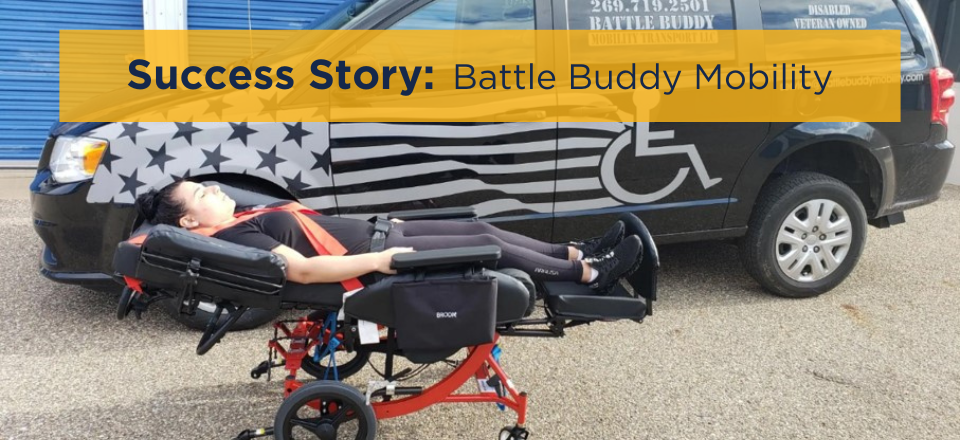
Rather than forcing caregivers to perform frequent manual adjustments, tilt-in-space technology changes the user’s position while maintaining body alignment. This redistributes pressure, improves comfort during longer periods of sitting, and reduces the effort required to keep someone properly supported.
3. Pressure Redistribution
Patients who spend long periods in a wheelchair need a seating system that distributes pressure evenly, protects vulnerable skin, and supports longer periods of comfortable sitting.
4. A Durable, Stable Frame
A strong wheelchair frame provides dependable support, while quality construction helps the chair continue to perform as intended despite frequent transfers, daily use, and constant movement throughout the facility. Broda wheelchairs are built on sturdy, stainless steel frames made to last. It’s not uncommon for customers to use our comfortable and safe wheelchairs for 20 years or more.
5. Accommodates Involuntary Movement
When we talk about wheelchair safety, many people have a mental image of patients strapped into chairs, unable to move. But a wheelchair that doesn’t accommodate involuntary movements or empower people to perform daily activities comfortably isn’t safe or supportive.
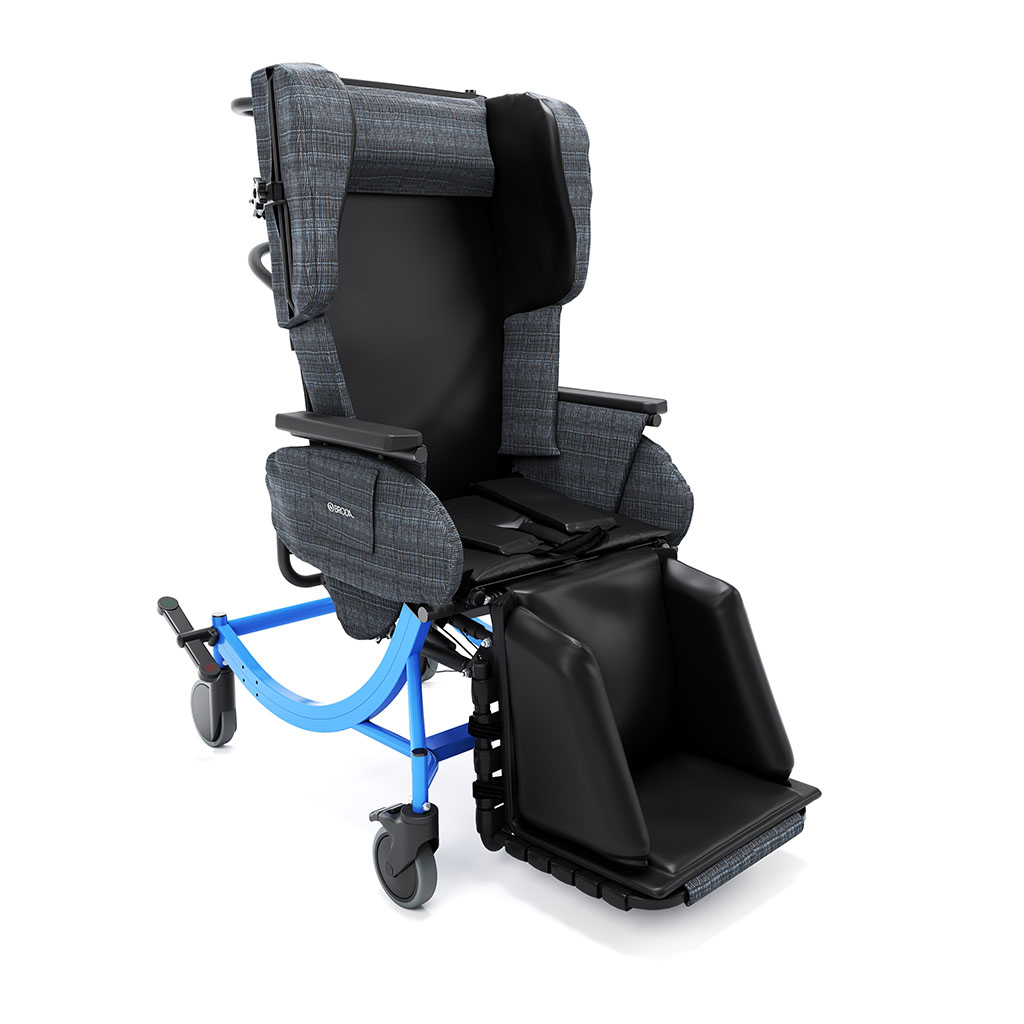
Alignment & Support
Head and shoulder supports enhance comfort and stability.
Tilt-in-Space
Repositions users while maintaining alignment and pressure distribution.
Durable Frame
Built for reliable, long-term performance.
Specialized Care Packages
Configurations support users with involuntary movement.
Pressure Redistribution
Cushions protect skin by evenly distributing pressure.
A Wheelchair That Works with the Body
We designed Broda’s Comfort Tension Seating® and tilt-in-space to reduce sliding and minimize the need for constant realignment. This creates an optimal postural tilt, and drives better clinical outcomes by:
- Allowing people to use their upper bodies better to perform activities of daily living (ADLs) like brushing their teeth, eating, and communicating.
- Creating space in the diaphragm, which improves oxygen and blood flow — boosting overall organ function.
- Empowering users to stabilize themselves and engage with the world around them.
- Reducing the stress of gravity and decreasing the risk of painful postural deviations.
What Caregivers Notice First
Caregivers rarely measure success in clinical terms. They notice the little changes.
One afternoon, a senior living resident stays in the dining room through dessert instead of asking to return to her room. Another man in the activity room finishes his Bingo card without constantly shifting in his seat. A resident who usually leans to one side sits more upright during a visit in the garden with his family. The staff realizes that these three residents spend more time talking with their loved ones than they did before.
Those moments are often the first signs that a wheelchair is providing the support the person needs. When a person feels properly supported, they’re more engaged.
Caregivers don’t measure success by how many times they reposition someone. They notice when they don’t have to.

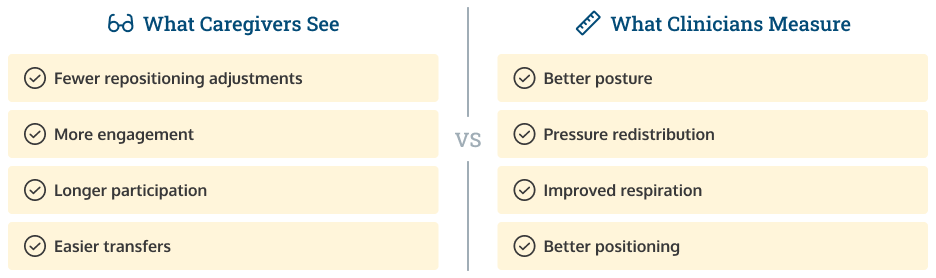
What Caregivers See. What Clinicians Measure.
Caregivers experience the difference in everyday moments. Clinicians see the same improvements through a different lens. They understand why those changes happen.
When a patient remains properly supported in a wheelchair, the benefits extend well beyond comfort. Good alignment helps distribute pressure more evenly across the body, reducing concentrated stress on vulnerable areas. Proper postural support allows the diaphragm to expand more naturally, supporting healthy breathing and circulation. Stable positioning also helps people use their upper body more effectively for everyday activities like eating, grooming, communicating, and interacting with those around them.
These clinical outcomes aren’t separate from the caregiver’s experience. They’re the reason a resident stays engaged longer, needs fewer repositioning adjustments, and participates more comfortably throughout the day.
Comfort Tension Seating® supports clinical goals. Rather than concentrating pressure in a few contact points, the Broda seating system contours to the body and distributes weight across multiple surfaces. Combined with tilt-in-space positioning, it helps reduce pressure, improve postural support, and accommodate involuntary movements associated with conditions such as Lou Gehrig’s disease, Parkinson’s disease, Huntington’s disease, or multiple sclerosis.
Every Comfortable Day Is a Safer Day
That evening, the daughter helps her father into bed. As she reflects on the day, she realizes she spent more time swapping stories over lunch than adjusting him in his wheelchair. The day felt less like managing equipment and more like enjoying each other’s company.
That’s the difference proper positioning can make.
Comfort isn’t separate from wheelchair safety. It’s one of the reasons it exists. Broda’s Comfort Tension Seating® conforms to our customers’ bodies, ensuring that they never have to choose between comfort and safety — they can have both.
Caregivers notice the difference. Clinicians understand the mechanics. Patients simply experience a better day.

Prioritize Comfort and Safety
Chat with a dedicated sales rep today!