When Losing Mobility Feels Like a Loss of Independence
We all carry stories about ourselves. When our bodies begin to change, it can feel as though we’re losing more than mobility. More than a loss of independence. It can feel as though we’re losing part of who we are.
You’re the one who brings a football to every family gathering. You run a few miles every morning because you love the fresh air. You mow the lawn with ’80s rock music in your ears. You never think twice about carrying every grocery bag in one trip. It’s not just what you do. Somewhere along the way, it became part of who you are.
Then one day, you notice the pain and swelling after every run. Your heart-pumping sprint evolves into a leisurely stroll. You drag a lawn chair to sit near the pickup football game and watch. While you’re no longer a “one-trip-wonder,” you put away the groceries, then reward yourself with a soda to steady your breathing.
We don’t think much about our routines until they begin to change.
Eventually, those small changes find their way into the exam room. When a physician recommends a mobility aid, most of us don’t argue with the logic. Emotionally, it’s much more complicated. We wrestle with wheelchair stigma and what the recommendation seems to say about our future. It asks us to imagine a version of life we weren’t ready to picture.
That may be why so many of us wait.
The Negotiation
You always laughed at your dad having to hold his book at arm’s length. You told yourself you’d never be like that. As the milestone gets closer, you tend to put it off as long as possible:
- You refuse to pull out the reading glasses until it’s obvious that you’re inventing lines in bedtime stories.
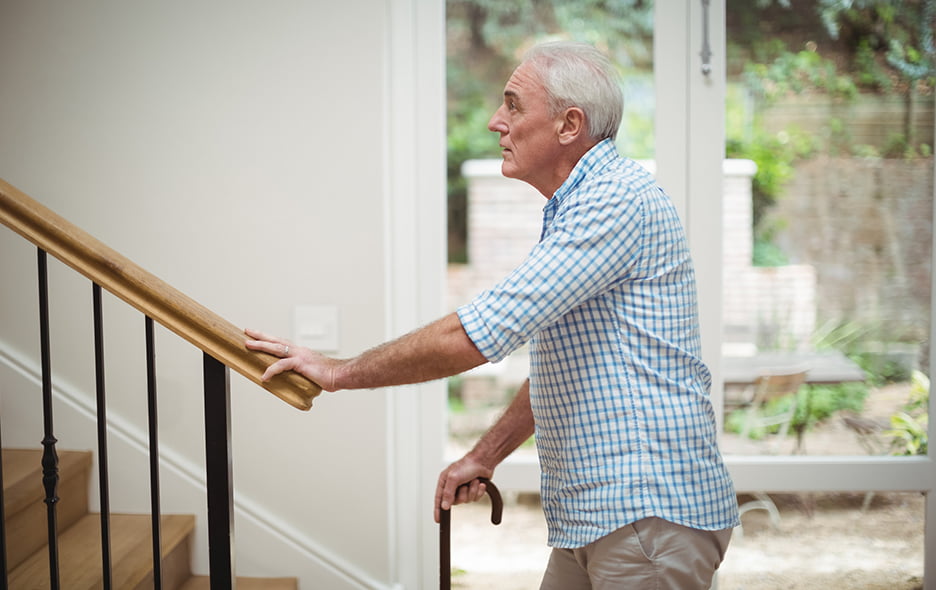
- You leave the cane in the car and promise yourself that you’ll use it when you really need it. It stays buried in the trunk until you’re tired of death-gripping handrails and walls.
- You tell yourself that you can drive at night, until the lanes of road blur, and you make a lefthand turn from the outside lane.
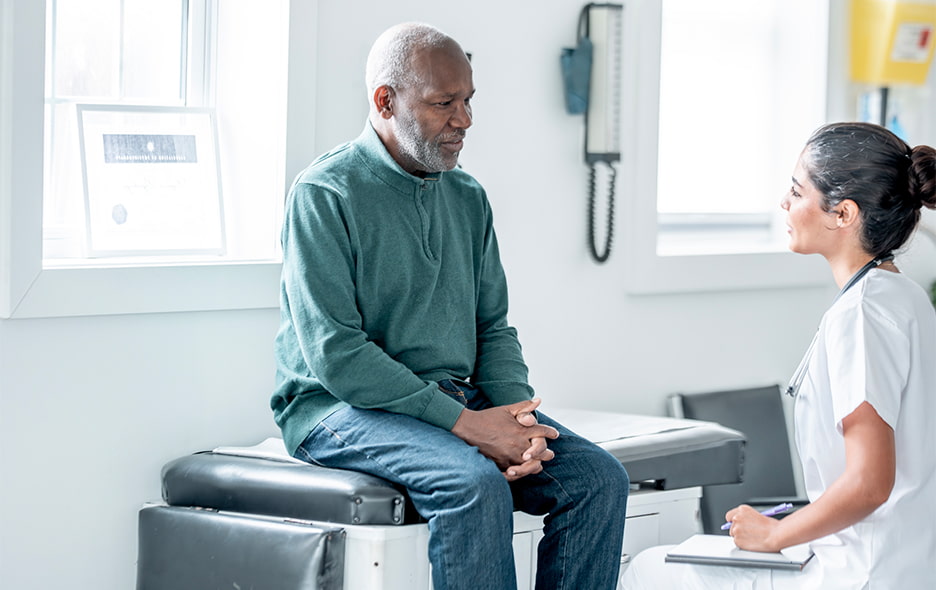
When you sit on the edge of the exam table and your physician recommends a wheelchair, you do what you’ve always done with change. You hesitate. You rationalize. You wave off the offer. Sometimes it’s easier to say your knees hurt than to admit you’re afraid of what a wheelchair seems to say about you.
At the other end of the exam room, a caregiver may hear something entirely different. They see a way to reduce your falls, conserve your energy, and help you engage in daily life. To them, the wheelchair keeps you safe. To you, it feels like crossing a line in the sand you never wanted to reach.
The Finish Line Keeps Moving.
If a physician suggests a wheelchair, you will probably shake your head. In your mind, wheelchairs are for the most extreme circumstances. You picture someone who cannot walk at all. You redefine “need.” As long as you can imagine someone worse off than you are, it’s easy to believe you’re not there yet.
- If you can still make it through the grocery store, even if you’re exhausted afterward, you don’t need one.
- If you can still attend church, even if you spend the next day recovering, you don’t need one.
- If you can still visit the grandchildren, even if you skip the zoo because it’s too much walking, you don’t need one.
“Need” has a funny way of feeling like a tomorrow problem.
The Cost of Waiting
Researchers have reached a remarkably consistent conclusion: the biggest barriers to mobility aids are psychological, not physical. One recent review found that social pressures and perceived wheelchair stigma consistently discourage people from using mobility aids. This pattern appears across different races, ethnicities, genders, and geographic locations. In other words, hesitation isn’t unusual. It’s human.
In many ways, waiting feels protective. It lets us hold on to the story we’ve been telling ourselves a little longer. If we can say, “Not yet,” we believe this is just a rough season rather than a permanent change. Waiting preserves hope. It preserves control. It preserves the possibility. But while waiting protects the story we tell ourselves, it can also shrink the life we’re trying to preserve. So, what does waiting cost?
Eventually, the body sets the itinerary.
You decline the invitation to the college football game. The walk from the parking lot, the stairs to the seats, and the trek back afterward feel like more than your body can handle.
You spend the day shopping with your daughter while she’s in town. She doesn’t mind stopping at every bench in the mall. Neither do you, until you spend the next day with your legs propped up instead of making memories with her family.
Life doesn’t shrink overnight. It narrows one declined invitation, one shortened outing, and one missed memory at a time.
We Measure Loss of Independence the Wrong Way
How do we know we’re independent? Most of us answer that question without realizing it. We think about the things we can still do on our own. We still bike around the lake in the morning. We plan the neighborhood pickleball game. We fix the leaky faucet. Over time, those ordinary moments become proof.
But what happens when one of those abilities begins to change? Does losing the evidence mean we’ve lost the person we believed ourselves to be?
Perhaps we’ve been measuring independence by the wrong standard. We count the things we can still do without assistance instead of asking a more important question: Am I still able to participate in the life that matters to me?
If the right mobility aid makes it possible to enjoy family dinners, attend church, spend an afternoon with the grandchildren, or simply leave the house without worrying about tomorrow’s recovery, perhaps it isn’t a symbol of losing independence after all. Perhaps it’s another way of retaining it.
Of course, that’s easier said than done. Redefining independence means letting go of one way of measuring ourselves and accepting another. We rarely measure ourselves by everything that’s still possible. Instead, we tend to focus on what we’ve lost.
Wheelchair Stigma isn’t Stubbornness
From the outside, waiting looks stubborn. We don’t resist mobility aids because we enjoy struggling. More often, we’re trying to protect something that feels deeply personal. The version of ourselves we’ve known for decades.
What if your loved one isn’t refusing the wheelchair?
What if they’re still saying goodbye to the life they thought they were going to have?
We often think of grief as something that follows death. But sometimes grief begins much earlier. It begins the first time you realize your body can no longer do something it always could. Before there’s acceptance, there’s sadness. Frustration. Bargaining. Hope that maybe next month will be different. Those emotions aren’t signs that someone is being difficult. They’re signs that something meaningful is changing.
Sometimes the hardest person to convince isn’t the patient. A daughter hears “wheelchair” and suddenly remembers the father in a worn motocross T-shirt who taught her to ride her red Schwinn. Or the husband who remembers his wife pulling him close to her and dancing barefoot in the kitchen. Accepting a wheelchair can feel like acknowledging that someone you love has entered a chapter you weren’t ready to imagine.
Saying “not yet” becomes a way of holding on to the person they’ve always known just a little longer.
Both are acting out of love. Both are trying to protect something precious.
A Different Conversation
Understanding why people wait changes the conversation. Instead of beginning with equipment, we begin by asking what you hope to keep doing. What outings have become difficult? What parts of life take more energy than they used to? Those answers often reveal far more than a mobility assessment alone.
That’s the philosophy behind the way we think about seating at Broda. Every design decision, from positioning to pressure management, begins with the same question: How can this help someone stay engaged in everyday life?
What if a Wheelchair Doesn’t Just Prevent Another Loss?
Truth be told, there isn’t a timeline that’s emotionally “correct” for knowing how to deal with a loss of independence. Hesitation is deeply human and understandable.
Somewhere along the way, mobility stops being about movement. It helps you stay connected to the people, places, and routines that make your life feel like your own. It’s the difference between leaving early and staying to laugh beside the bride as she tosses the bouquet and three of her bridesmaids hit the floor. It’s the difference between sitting on the porch watching the grandchildren and wandering into the backyard to show them how to fill up water balloons.
If a mobility aid helps you stay connected to the things that give life meaning, then perhaps the story was never really about the wheelchair.
It’s about refusing to let your body become the sole author of the next chapter.

Ready for a quote?
Chat with a dedicated sales rep today!